Guides · Radiant heating
Terrazzo over radiant floor heating: what to plan
In Québec, hydronic radiant floors are spreading in new houses, basements and condos. Good news: terrazzo is one of the finishes that works best with them, provided a few points are prepared before pouring.
Why terrazzo likes heat
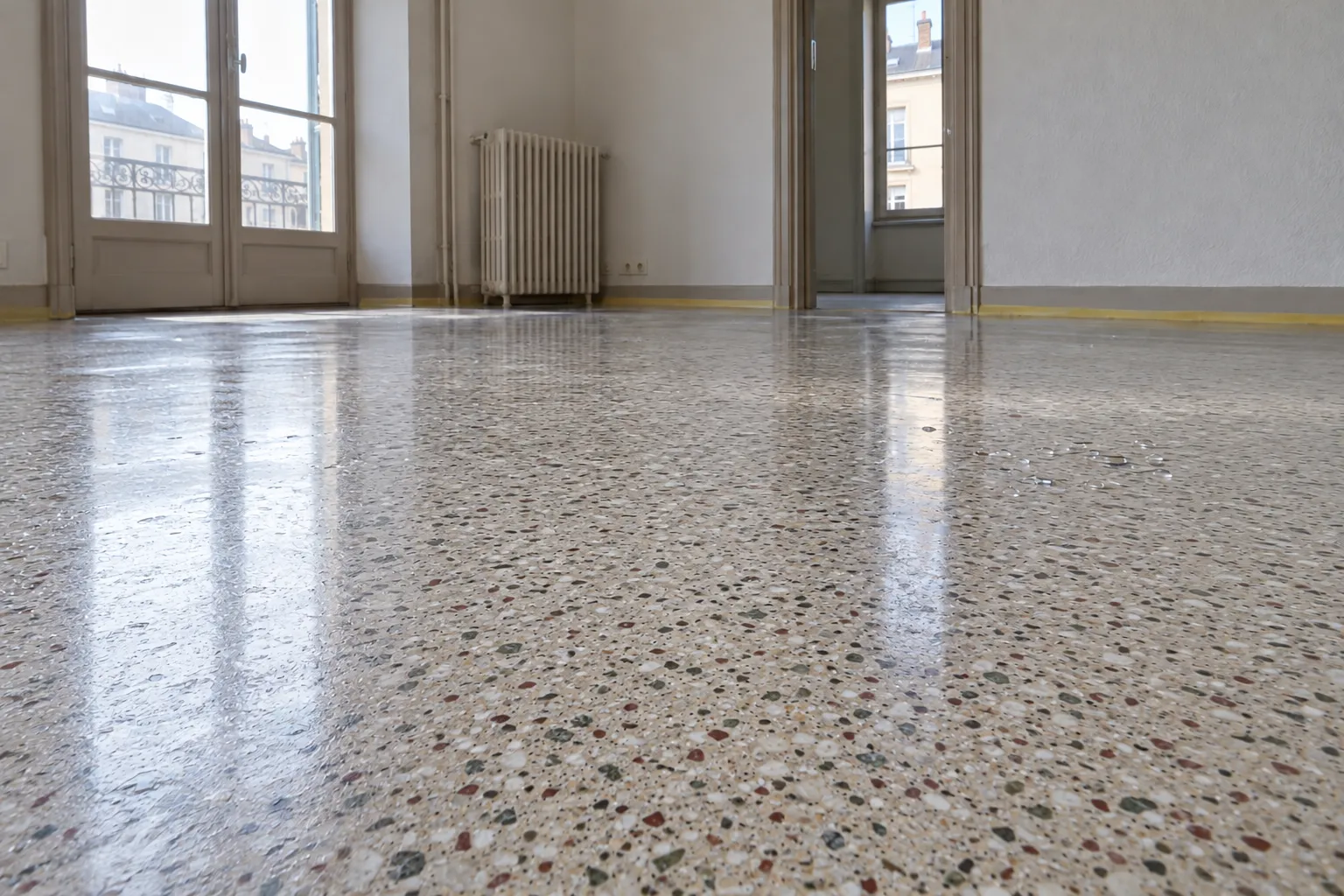
Terrazzo is a dense mineral material: it conducts heat well and stores it. Laid on a heated slab, it spreads a gentle, even warmth, without the noise or movement of a wood floor.
This thermal mass has a practical consequence: the floor takes longer to warm up, then holds the heat for a long time. Controls are set accordingly, with moderate setpoint changes.
The slab and loops come first
Everything rests on the slab that embeds the loops: it must be stable, flat and thick enough above the tubes. Before pouring, we check the loop layout, the cover thickness, the flatness and the residual moisture of the slab with your contractor.
- Loop and manifold layout
- Slab thickness above the tubes
- Slab joints and heating zones
- Residual moisture measured before installation
Joints in the right place
A heated floor expands. Control joints and terrazzo divider strips are placed according to the slab joints and heating zones, never at random. Well drawn, they become part of the pattern.
Curing and gradual start-up
Heating stays off while the terrazzo is poured and cures. It is then brought back gradually, in steps, following the instructions of the chosen system’s manufacturer. A sudden temperature rise is the main cause of cracks in a new heated floor.
FAQ
Can terrazzo tiles go over radiant heating?
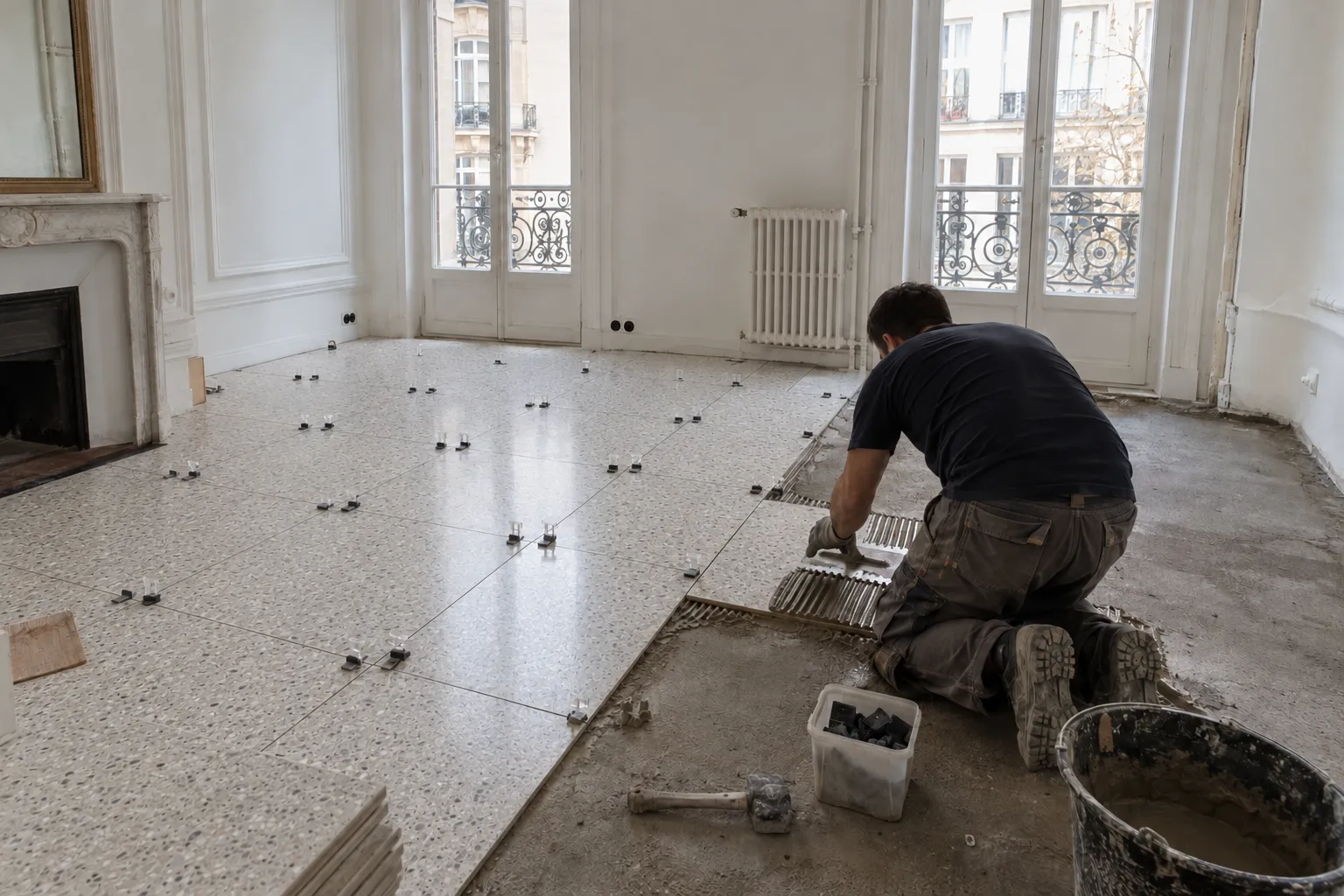
Yes. Tiles are set on the heated slab with an adhesive mortar suited to heated floors, and movement joints planned according to the zones.
Is terrazzo cold underfoot without heating?
Like stone or ceramic, it feels cool to the touch. That is why radiant heating is a natural partner for terrazzo, especially in basements and bathrooms.
Radiant heating planned in your project? Send us the loop layout with your request.