Guides · Systems
Epoxy or cementitious terrazzo: the differences
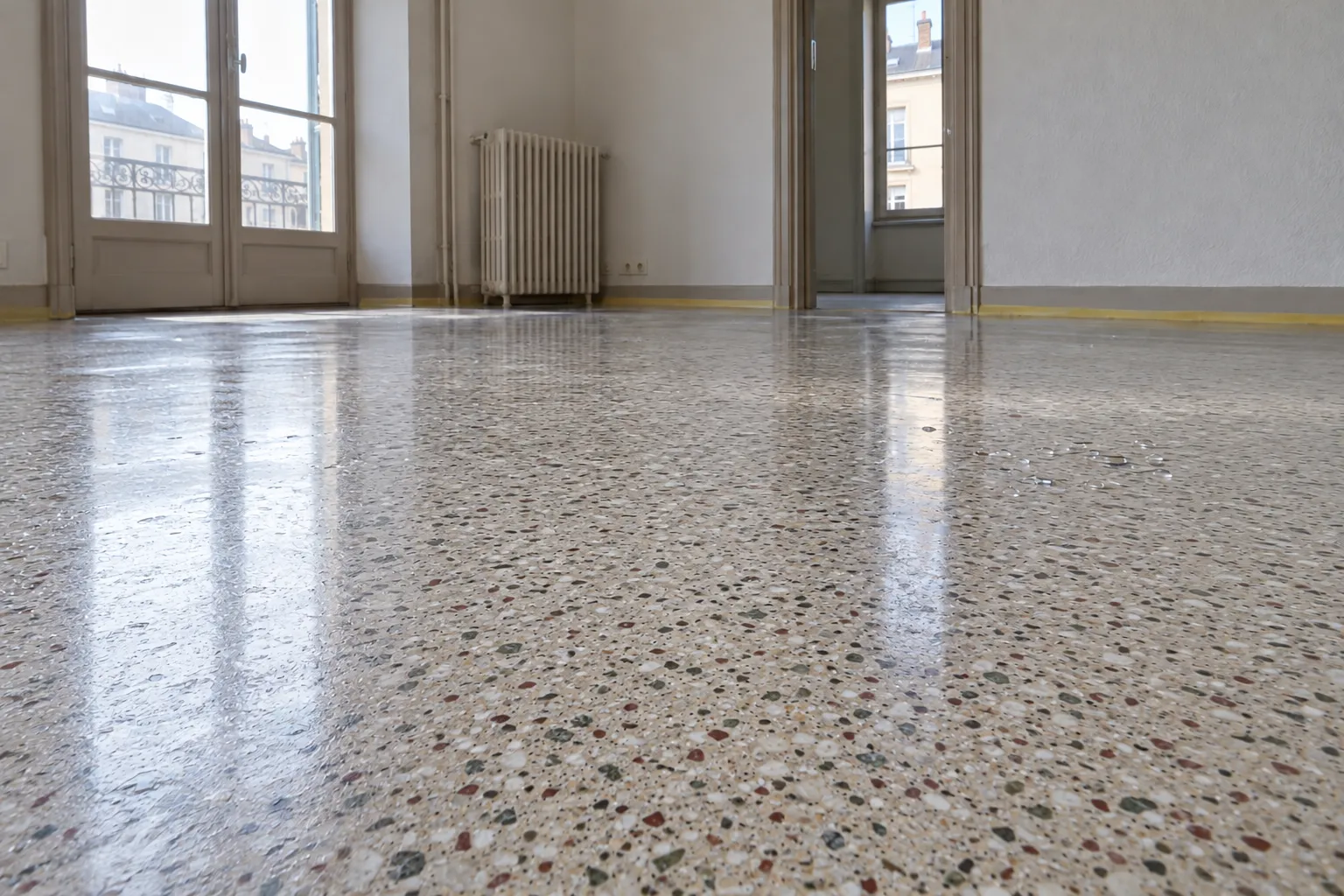
In North America, most recent commercial terrazzo uses an epoxy binder; traditional terrazzo uses a cement binder. Both have their place: here is how to tell them apart.
Cementitious terrazzo: the tradition
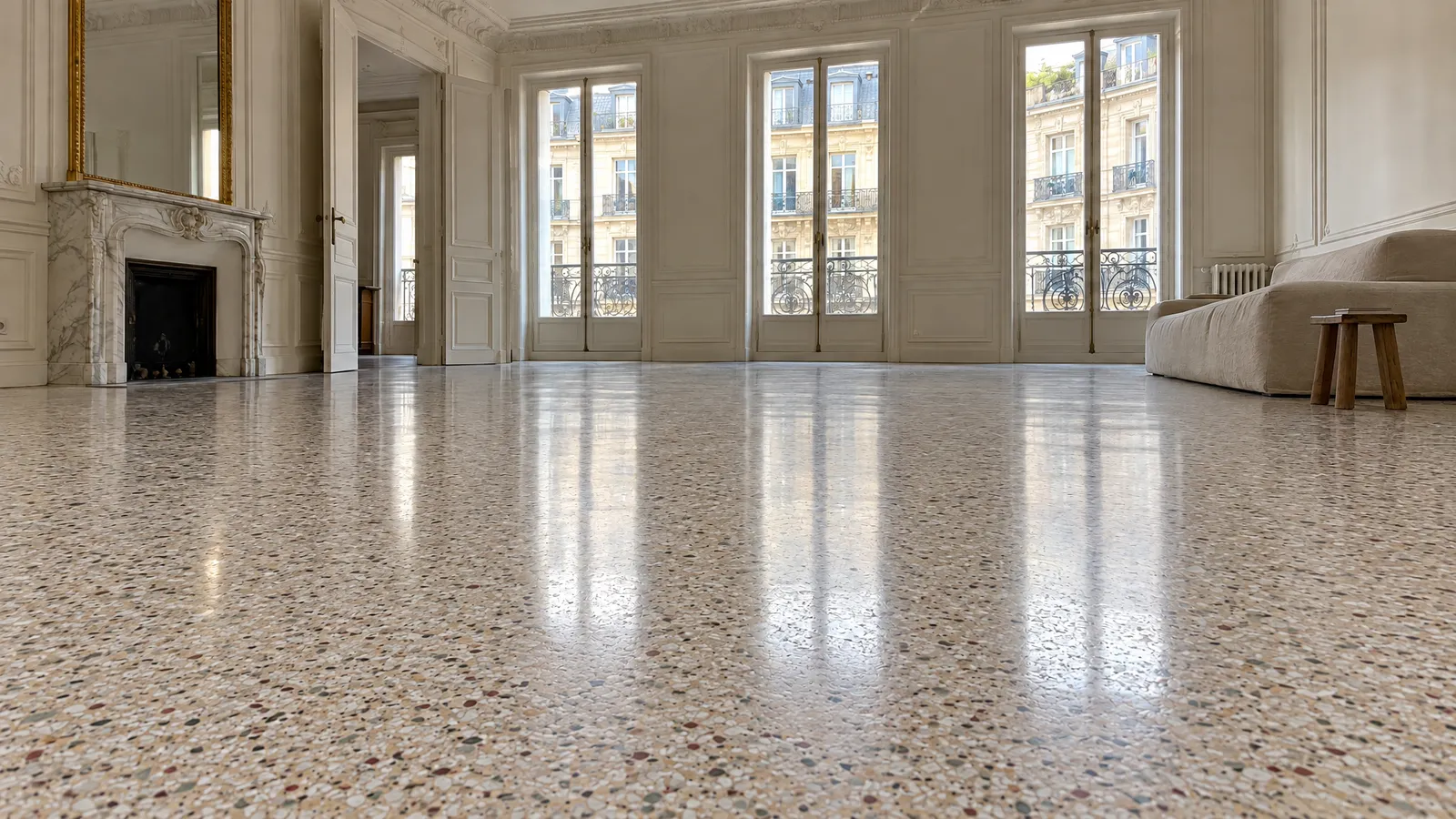
The binder is cement, often white and tinted. The system is thicker and heavier, with a texture and depth that suit heritage and residential projects. It needs a longer cure before final grinding.
Epoxy terrazzo: thin and colourful
The binder is an epoxy resin. The system is thin (a few millimetres), light, and allows bold colours and precise patterns cut by divider strips. It goes into service faster, which suits retail and institutions.
What changes on site
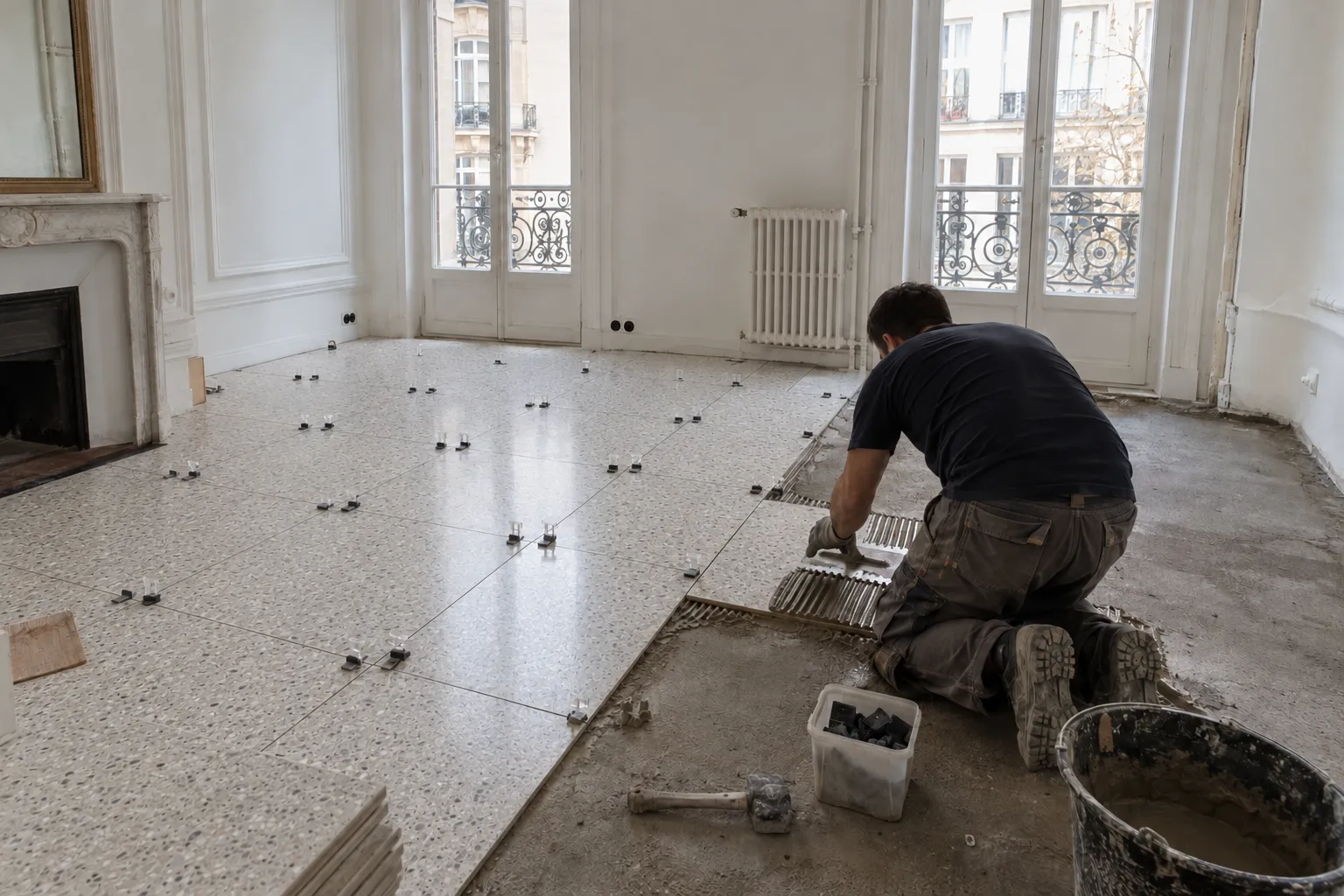
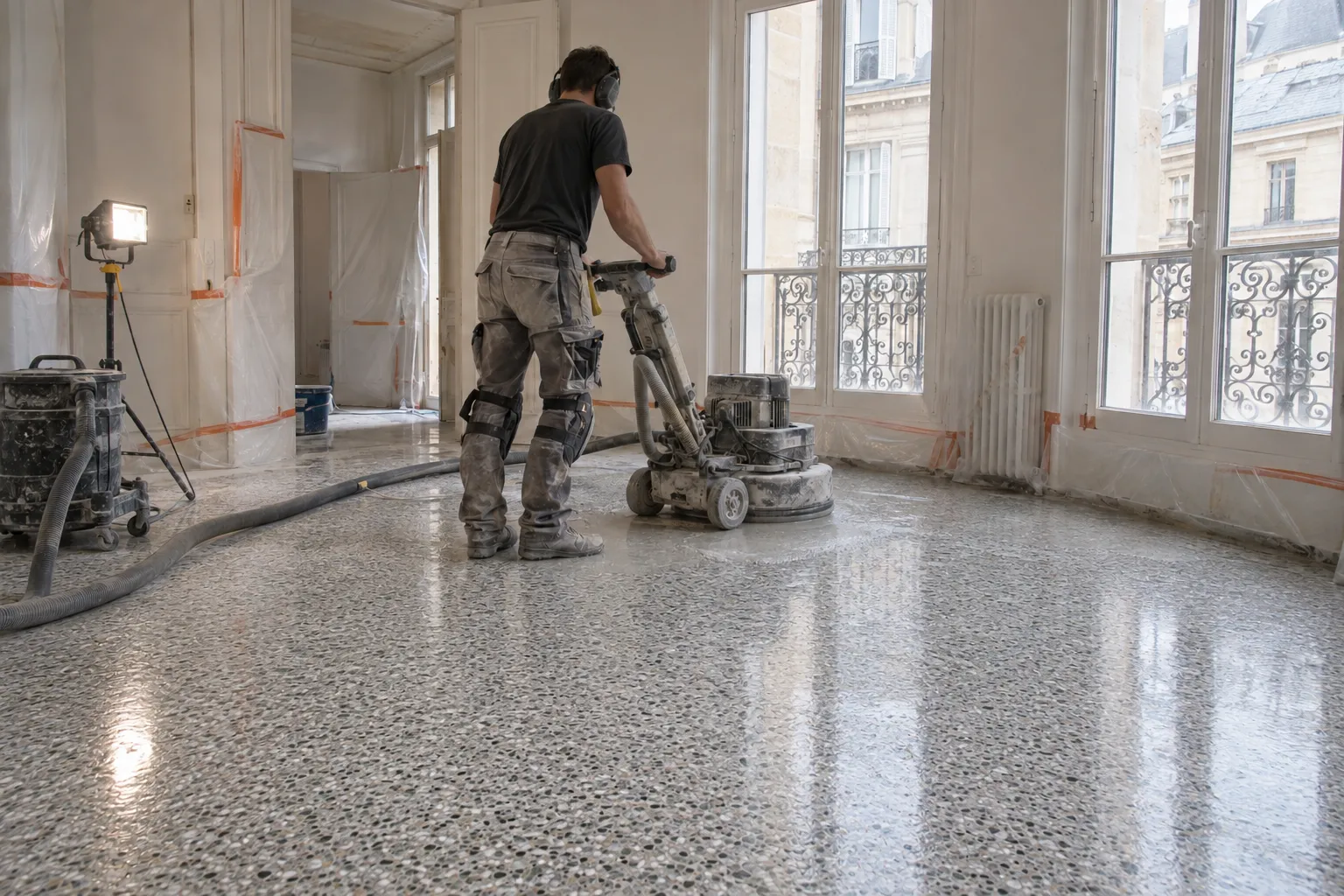
Epoxy requires a dry slab: concrete moisture is measured before installation. Cementitious terrazzo tolerates some substrates better but weighs more. Both are ground, polished and sealed; neither is installed outdoors in Québec.
- Allowable thickness and weight
- Slab moisture
- Desired colour palette
- Time before the floor goes into service
In the specifications
In Québec, specifications classify terrazzo under MasterFormat: section 09 66 13 for Portland cement terrazzo, 09 66 23 for resinous terrazzo. Defining the system at design stage avoids surprises at bid time.
FAQ
Which one for a house?
Both are possible. Cementitious terrazzo offers a deeper material; epoxy, bright colours and a thinner build. The substrate and the look you want decide.
Tell us about your project: we reply by email.