Guides · Comparison
Poured terrazzo or tiles: which to choose?
Poured in place, as tiles or as precast pieces, it is the same material. The right choice depends mostly on your substrate, the allowable weight and the look you want.
Poured in place: a continuous surface
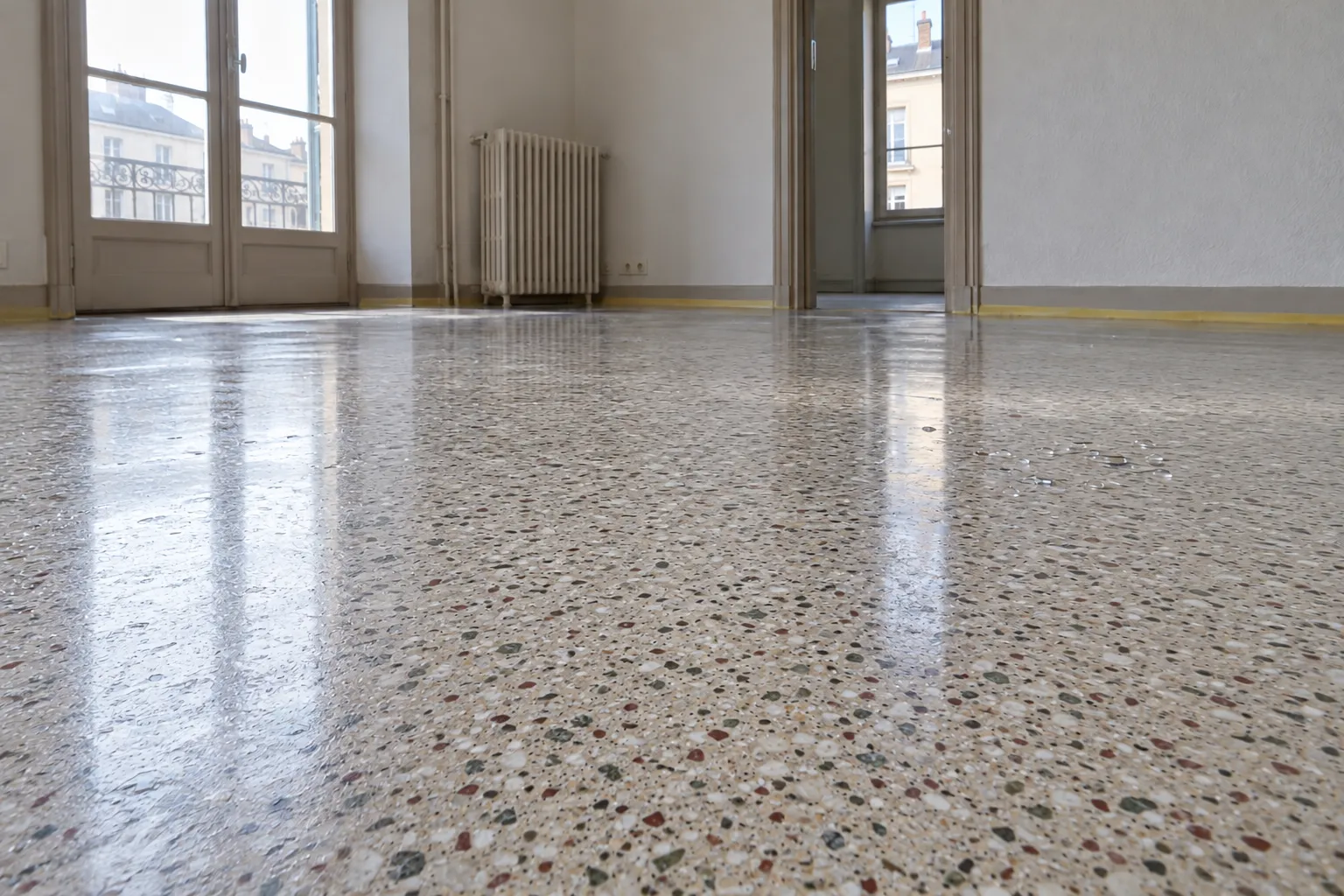
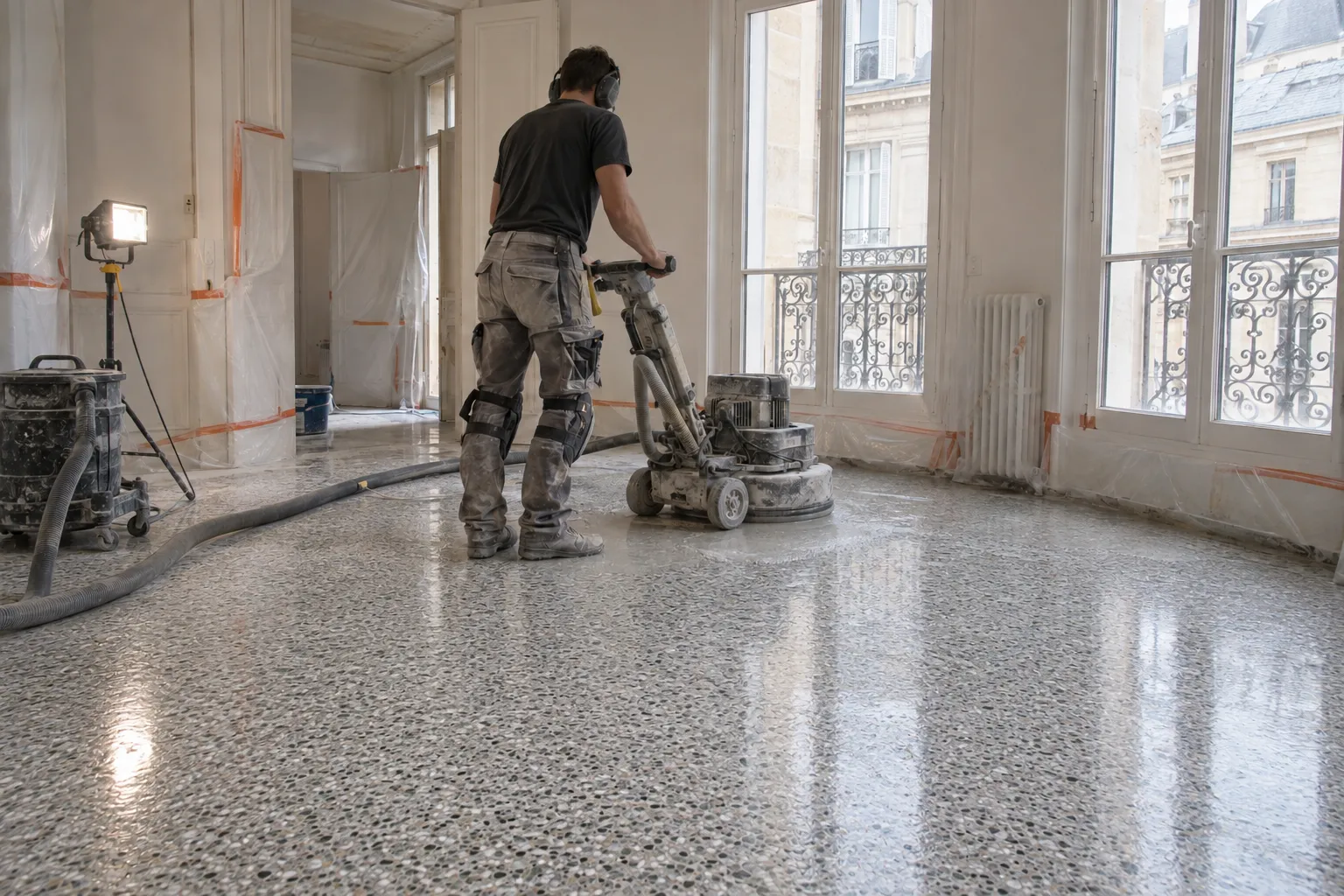
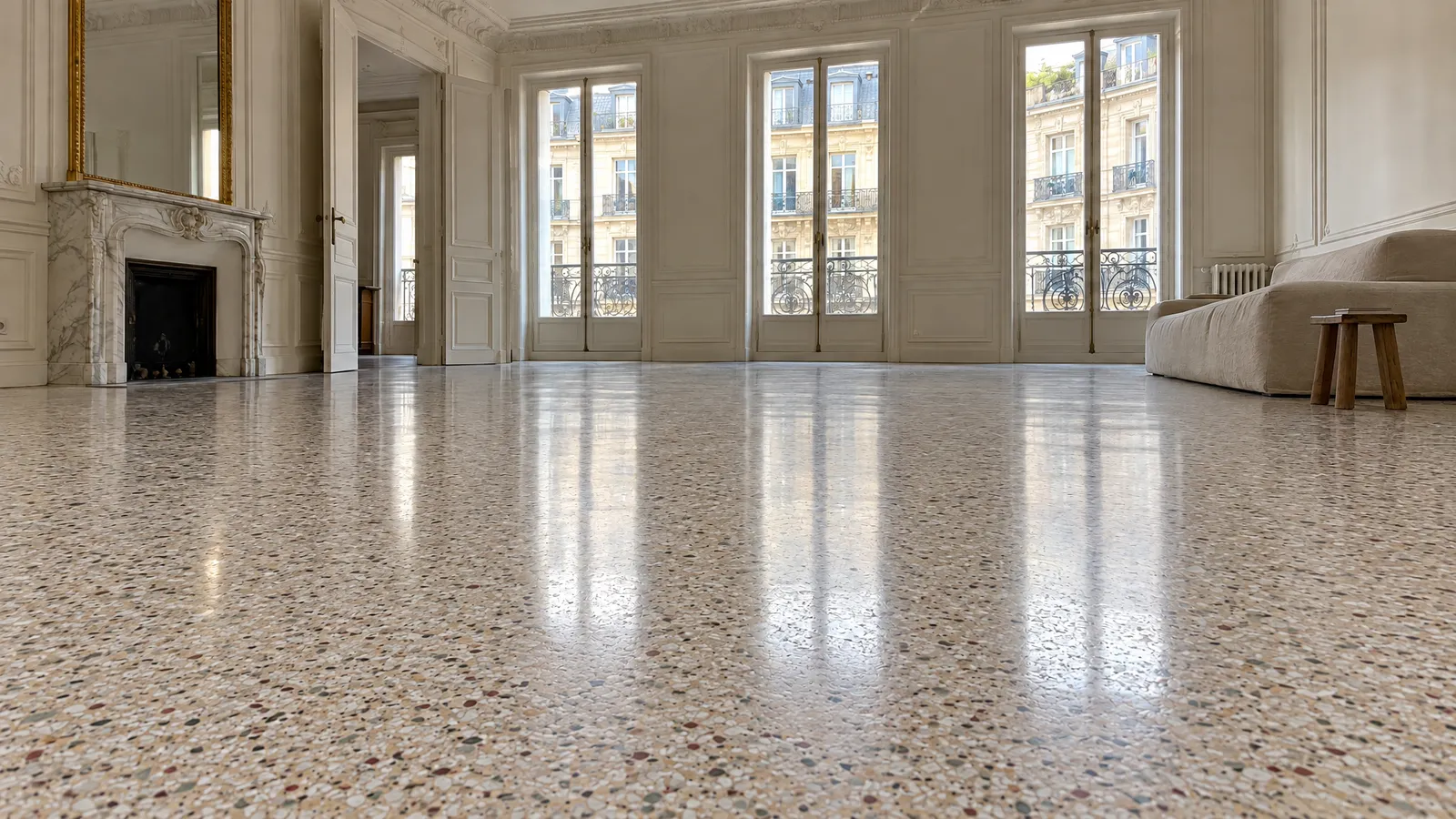
Poured-in-place terrazzo is made on site: the composition is poured on a prepared substrate, then ground and polished. You get a continuous floor with only the necessary joints, and complete design freedom (patterns, borders, colour changes).
It needs a stable, rigid substrate: the concrete slab of a condo, a new house or a basement.
Tiles: lighter and faster
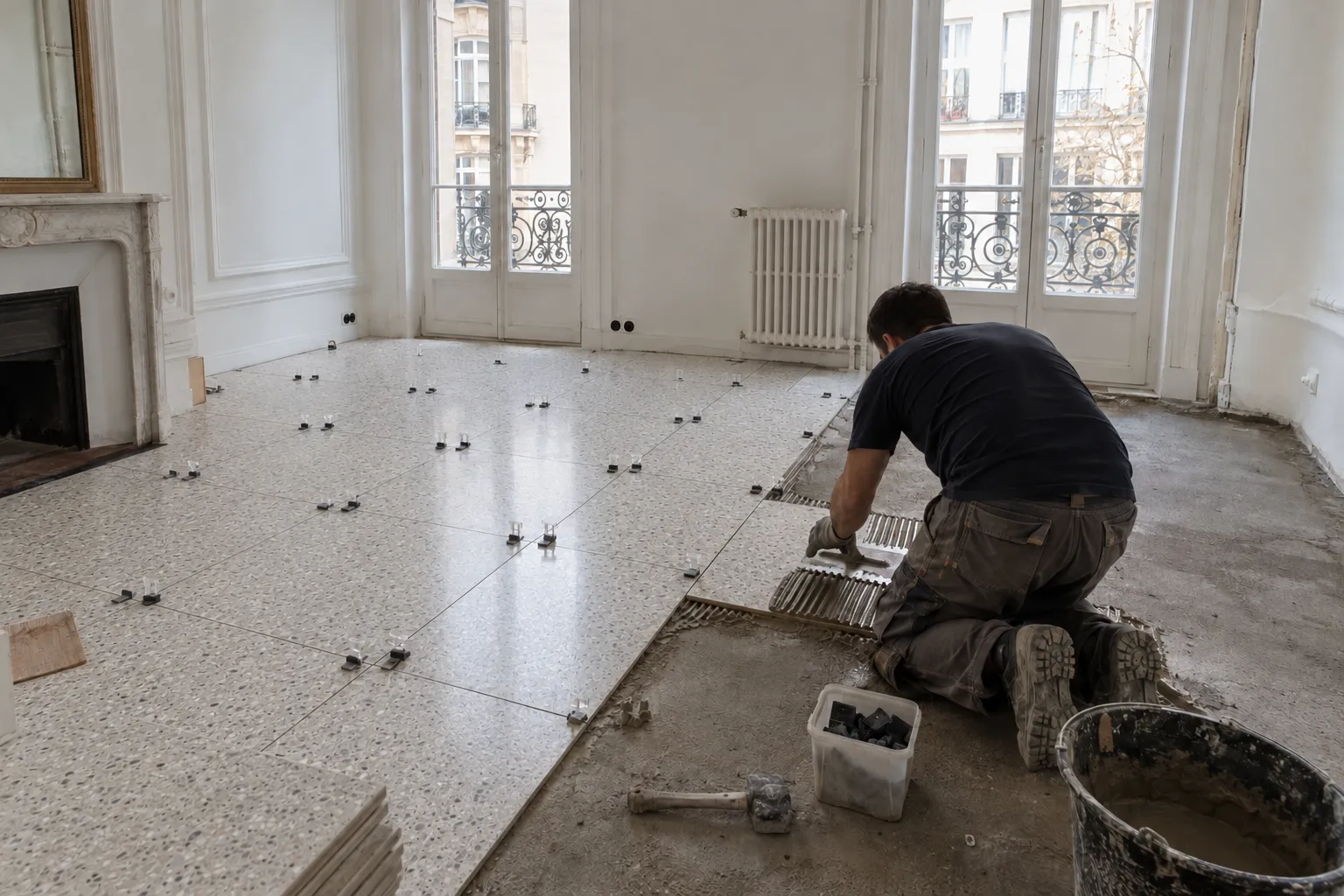
Terrazzo tiles are made before installation, in 45, 60 or 120 cm. They are laid like ceramic tile, with a layout and joints. They suit the wood floors of plexes and upper storeys, where weight and thickness must be limited, and projects that need to move fast.
Precast: stairs, countertops, pieces
Treads, risers, countertops, basins and benches are made in the shop, in the composition of your floor or another one. It is the way to carry terrazzo into furniture and stairs.
How to decide
Look at your substrate, the available height, the thresholds, the schedule and the look you want. A stable slab and the wish for a jointless surface point to poured terrazzo; a wood floor or a tight deadline point to tiles. The project study and the sample confirm the choice.
- Substrate: concrete slab or wood floor
- Available height and thresholds
- Look: continuous or laid out
- Site schedule
FAQ
Are tiles cheaper than poured terrazzo?
Not necessarily: it depends on the area, the substrate and the composition. We price both options when both are possible.
Can the two be combined?
Yes: a poured floor on the ground floor, tiles upstairs and precast treads in the same composition, for example.
Tell us about your project: we reply by email.